Good Advice

From coiffured cockapoos to sleek salukis, short-haired dog breeds and dogs with long, glorious coats all share one thing in common – grooming is really important. All dogs need regular brushing and grooming to keep them clean, healthy and comfortable and it’s a big part of responsible dog ownership.
Brushing and grooming your dog should be carried out as often as possible, daily if you like! It's a great way to minimise shedding, improve coat condition, check for any unwanted visitors of the insect variety, keep an eye on any new lumps and bumps and more than anything, it's a lovely way to bond positively with your dog.
It's important to note that there's a big difference between a professional clip carried out by a qualified dog groomer and the daily/weekly maintenance you carry out yourself. We're going to focus on the latter but if you do want to find a professional groomer who can help you with clipping your dog's coat, it's a good idea to ask for recommendations from your vet and also trusted friends about who they'd use. Always check the groomer's qualifications and insurance and before you book your dog in, ask the groomer if you can pay them a visit to look around their premises, ask about how they work and whether they do introductory sessions to help get your dog used to being groomed. It's important that your dog has a positive experience and that you feel comfortable with the way they work.
Our health and welfare supervisor, Elly is never phased by a muddy dog. "If they're muddy, they've probably had a great time and that's the most important thing!" she laughs. Elly is fantastic at putting our dogs in training at ease, keeping our dogs looking fresh and has lots of advice to share.
What if my dog doesn't like being groomed?
"For dogs that don't like being brushed, introduce the grooming process gradually and keep your sessions short and sweet," advises Elly. "It's really, really important not to 'force' grooming on your dog and if they move away from you, let them do that and have their space. You can continue when they return to you."
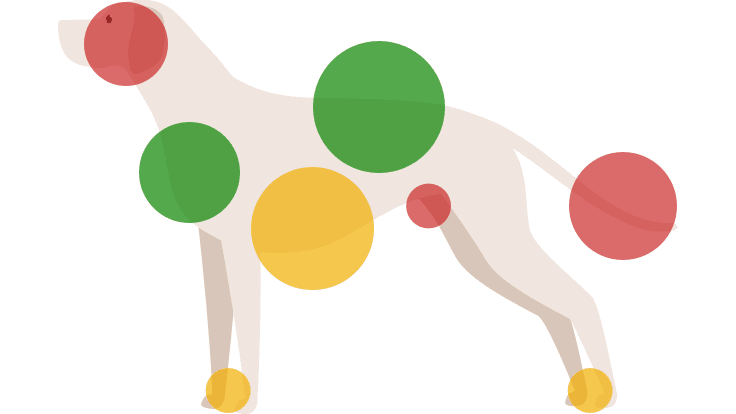
Dogs will be more sensitive to being touched in some areas than others. Using the graphic above:
- Areas marked with green are the areas that generally a dog is most comfortable with
- Areas marked yellow may be more sensitive
- Red shows highly sensitive areas
Every dog is unique, so it's important to take it slowly and observe your dog for any signs of stress or discomfort.
Elly says that a really nice way to start things off is with a cuddle and from there, gently start to introduce a soft brush in the areas they don't mind being touched so they get used to the feel of the brush on their coat.
When you're grooming your dog it's always best to start with the areas they're most comfortable with, gradually moving onto the more sensitive bits. Elly says, "Remember, keep it short and sweet and give calm, verbal praise and possibly a food reward or two so they associate this time positively. You can then finish the session on a great note by playing a game with your dog."
Timing is also important when you're dealing with a dog that gets bored or shows signs of stress around grooming. "Make sure there are no distractions, pick a time when you're unlikely to be disturbed and try to get your dog in a calm frame of mind before you even show them a brush!" Elly advises.
Treats and games can be used as positive reinforcement to make the session more enjoyable for your dog and it might be helpful to let your dog have a sniff of the brushes before you use them.
Preparation and equipment
Before you get down to actually grooming your dog, it's good to just run your hands over them and check for any lumps and bumps. And if your dog has a longer coat, check for mats in the hair. "Try and work these out gently before you get properly started, so you're not unexpectedly pulling on a mat during brushing." says Elly. "If you find a particularly knotty bit, it's always better to snip it out with a pair of scissors rather than pulling on your dog's skin."
The equipment that our Health and Welfare team use to groom our dogs is simple. "I start off with something called a 'Zoom Groom' brush which I only use along the dog's back," explains Elly. "They're made of flexible rubber, don't have any harsh bristles and you can use them backwards and forwards. It's a great little massage, stimulates blood circulation to the skin and muscles, helps to remove any dead coat and most dogs really enjoy it."
Elly then progresses to a soft brush. "I'll use this brush gently all over the body, including the legs, tails and ears. The fine bristles help spread oils through the coat and make it shine."
Finally, Elly uses a comb with both fine and thicker spaced teeth. "I mainly use the thicker side and gently apply it flat against the body. It's great for removing all the little hairs you've loosened in the previous two stages," she says. It's important to have checked for lumps and bumps before you use the comb because the teeth could easily nick a lump which could cause your dog pain. "The finer teeth on the opposing side of the comb could be useful, if your dog will tolerate it, to gently work out any mats on longer hair."
Room to groom your dog
At Dogs for Good, we have a dedicated space in our welfare area which has a shower, a grooming table and lots of space. "At home, it's best to choose a place that's quiet, well lit, has good access in and out and is easy to clean up afterwards," says Elly. "Some people like to use the garden but I prefer not to because very often, an outdoor space will come with lots of distractions. If you keep the sessions short and sweet, brush calmly and frequently, it shouldn't be too difficult to manage indoors."
How to bath your dog
A proper bath with shampoo products can strip the natural oils from a dog's coat so at Dogs for Good, we don't bath our dogs unless they really need it. "I use a mild dog shampoo and keeping the water tepid, work some shampoo up into a lather and massage it all over the dog for a minute or so. Then I thoroughly rinse off and… stand well back for the inevitable shake! Unless you're a lover of the grimy look, it's also a good idea to stand well back from a dog that's exiting a muddy pond!" laughs Elly.
For dogs that are really itchy, you can use a special medicated soothing shampoo and bath them a bit more frequently. Similarly, for dogs that have a skin infection, there are special infection medicated shampoos available to help keep them clean.
And now for the big question: does ketchup get rid of the smell of fox poo? "Yes, ketchup can be effective at neutralising the odour but you then have to clean the ketchup off," says Elly. "There is special dog shampoo that neutralises the smell so I'd advise wiping off the fox poo as quickly as you can after your dog has rolled in it and then spot clean with a small dot of shampoo and a sponge."
After your dog has had a post-bath shake, towel dry them off as much as you can or that they'll tolerate and let them dry off naturally.
In between proper baths, you can clean muddy dogs off by using warm water and a sponge.
Claw clipping
"My advice is to pop your dog along to see the vet nurse as clipping claws is something best left to a professional," says Elly. "There's something called the 'quick' which is a vein that runs down the nail and if you clip claws too short, you can catch the vein which is super painful for your dog. It also bleeds profusely which is really upsetting."
In the normal course of things, your dog's front and back claws should wear themselves down on hard surfaces during road walks etc. But the dew claws – more like a thumb, raised further up the paw and only located on the forelegs – don't come into contact with the floor and these are the ones that need professional clipping before they grow too long. "Monitor your dog's claws regularly to make sure they're not starting to curl backwards or are sharp and broken. In terms of length, what you're ideally looking for is a tiny gap between the end of the claw and the ground," says Elly.
While you're checking claws, take a look at your dog's paw pads too. "Check them weekly as they're in contact with the environment constantly and may pick up thorns and cuts," says Elly.
Checking your dog's eyes
Gunky eyes aren't comfortable for a dog and it's a simple thing to remedy yourself. Elly says, "As part of your regular brushing routine, take the opportunity to check your dog's eyes and you'll quickly get to know what looks normal and healthy for them. Gently lift the top eyelid and check that it's clear and not bloodshot in any way. Then gently pull down the lower eyelid which should be a nice pale pink colour and again, not red or bloodshot. In the normal course of things, an eye will clean itself but just like us, dogs get sleep dust and it's easy to wipe away with a damp cloth to make them more comfortable."
If you see any green or yellow discharge or redness that's looking sore or weepy, make sure to get an appointment with your vet as soon as possible.
Grooming your dog's ears
When a dog rolls around, they often rub their face and ears on the ground… cue dirty outer and inner ears. "When you brush a dog's ears, make sure you do it with a soft brush and gently lay the ear on your non-brushing hand so you support it as you brush," says Elly.
"While you're grooming your dog, you can take the opportunity to check their ears and as with their eyes, regular checking means you'll get to know what looks healthy and normal," says Elly. "Check for scratches on the outer ear and then move the ear gently so you can look down into the ear canal. You're looking for a pale pink colour overall. If it looks a bit red, keep an eye on it and seek veterinary help if it doesn't calm down."
Dogs have earwax which is generally a dark brown colour and can be removed to make sure it doesn’t build up. "I usually wrap a damp bit of cotton around my finger and gently remove the wax," says Elly. "Make sure that you don't use wet cotton as any drops that fall into the ear canal will result in your dog scratching or shaking their head."
Finally, if your dog is in any discomfort, their ears are inflamed or overly waxy and also if you smell anything a little bit overly whiffy coming from your dog's ears, it could mean they have an infection which will require the attention of a vet.
Grooming your dog's tail
Always be careful and use a soft brush when brushing your dog's tail as longer, more feathery tails can become a little matted. "In addition, if your dog has an upset tummy, you should keep an eye on their bottoms for any faecal matter that becomes lodged in the area and remove it with damp cotton wool to keep your dog comfortable and clean. Alternatively, you can also carefully trim it out," says Elly.
Some additional benefits of grooming
For some of the people we work with at Dogs for Good, brushing the dog that lives with them can be a support activity for physiotherapy – the repetitive movements of grooming and holding a brush helping to support movement and grip. In addition, brushing a dog can help to put a positive focus on good personal hygiene routines for autistic children who sometimes struggle with the sensory challenges that brushing their own hair brings.
Grooming is an important way to bond with your dog. When a person that we support is partnered with one of our dogs, we teach the person how to groom them. For people with mobility issues, there are options available to help them with dog grooming.
"There's plenty of grooming gloves on the market to experiment with," says Elly. "Some are put on like an oven glove and others will strap around the back of the hand to help keep them in place. Lots of the people we work with will ask our dog that they are partnered with to pop up onto a bench or the sofa so they're easier to reach, and people that can will sit on the floor and groom their dogs." Our instructors help the individual people they work with to figure out the best way to keep their dog in tip top condition.
Help support our life-changing work
Across the UK, millions of people are living with diverse health and social needs. For many people, including those affected by disability, dementia, autism or mental ill health, life is increasingly difficult — and often isolating.
Our work goes to the heart of these problems. Through connection with a dog, we help people to live healthier, happier and more independent lives.
As the demand for health and social care keeps rising, could you help us to bring life-changing connections with a dog to even more people?
